
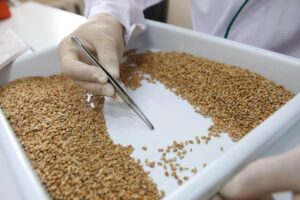
Inspecting wheat quality before bulk purchase helps buyers assess grain condition and suitability for processing.
Buying wheat in bulk is an important decision for flour mills, commercial bakeries, food manufacturers, and agricultural commodity traders. The quality of the wheat purchased can affect flour production, product consistency, storage, and overall business performance.
For businesses sourcing imported wheat in Nigeria and West Africa, understanding the key quality indicators can help reduce purchasing risks and ensure that the grain is suitable for its intended use.
Renamy Global Resources Ltd understands the importance of dependable agricultural commodity sourcing and encourages commercial buyers to pay attention to the following factors when evaluating wheat supplies.
1. Check the Grain’s Physical Condition
A visual inspection is a useful first step when assessing wheat quality.
Good-quality wheat should generally have a reasonably uniform appearance appropriate to its variety and grade. Buyers should look for excessive broken kernels, discoloured grains, visible mould, insect damage, and unusual foreign materials.
However, appearance alone cannot establish the full quality of a shipment. Laboratory testing and appropriate inspection procedures are necessary to assess important characteristics that cannot be confirmed by sight.
2. Verify the Moisture Content
Moisture content is an important consideration when buying wheat for commercial storage and processing.
Excessive moisture can increase the risk of spoilage, mould development, and deterioration during storage, depending on the storage conditions and duration.
Buyers should request the measured moisture content and confirm that it meets the agreed product specification and applicable storage requirements.
A calibrated moisture meter or an appropriate laboratory test can help establish the actual moisture level.
3. Review the Protein Content
Protein content is particularly important for wheat intended for flour milling and baking.
Different applications require different wheat characteristics. For example, bread production often benefits from wheat with suitable protein quantity and gluten functionality, while other food products may require different specifications.
Buyers should not rely on protein percentage alone. They should also consider the intended application, flour performance requirements, and any additional agreed quality parameters.
4. Ask for a Certificate of Analysis
A Certificate of Analysis (CoA), where available and applicable to the shipment, provides documented information about tested product characteristics.
Depending on the contract and product, the document may include moisture content, protein content, test weight, and other agreed parameters.
Before completing a bulk purchase, buyers should:
- Confirm that the certificate corresponds to the actual product or shipment.
- Review the reported results against the purchase specification.
- Check the issuing laboratory or inspection provider.
- Clarify any missing information with the supplier.
- Agree on the inspection and dispute-resolution procedures before shipment.
Documentation should support the agreed specifications rather than replace appropriate inspection.
5. Check for Foreign Materials and Contamination

Wheat kernels should be checked for grain condition, damage, and foreign materials.
Wheat may require cleaning to remove materials such as stones, chaff, dust, weed seeds, and other unwanted matter.
Buyers should establish the acceptable limits for foreign materials and damaged kernels in the purchase agreement. They should also confirm that suitable inspection and testing procedures are in place.
Where food safety is concerned, appropriate testing and handling controls are essential. A visual inspection alone cannot rule out every possible contaminant.
6. Evaluate Test Weight and Other Relevant Specifications
Test weight is one of the characteristics used in evaluating wheat. It provides information about the grain’s bulk density, although it does not independently determine milling performance or overall quality.
Depending on the intended application, commercial buyers may also need to consider:
- Falling number
- Gluten strength or functionality
- Kernel condition
- Variety and grade
- Foreign matter limits
- Applicable food safety requirements
The appropriate limits should be agreed upon before purchasing, rather than assuming that one specification is suitable for every type of wheat.
7. Confirm That the Wheat Suits Your Business
Before ordering, identify the purpose for which the wheat will be used.
A flour mill may have different requirements from a pasta manufacturer or a commercial bakery. Selecting wheat based on price alone can lead to problems if the grain does not meet the buyer’s production needs.
Share your technical requirements with the supplier and request information demonstrating whether the offered wheat meets those requirements.
8. Assess the Supplier’s Documentation and Delivery Arrangements
Product quality is only one part of a successful bulk wheat transaction. Buyers should also understand the supplier’s documentation, shipment arrangements, delivery terms, and process for handling quality disputes.
Before committing to an order, clarify:
- The product type and agreed specifications
- The quantity and packaging
- The inspection arrangements
- The required shipping and import documents
- The delivery terms and destination
- The procedure for resolving specification discrepancies
Clear communication helps both parties understand their responsibilities before the transaction proceeds.
Why Choose Renamy Global Resources Ltd?
Renamy Global Resources Ltd operates in agricultural product importing and exporting, including wheat supply. We recognise the importance of matching product specifications with the needs of commercial buyers.
Businesses seeking imported wheat can contact our team to discuss their required product type, quantity, technical specifications, packaging preferences, and destination.
Our goal is to help buyers assess their requirements and make informed decisions about agricultural commodity sourcing.
Final Thoughts
Checking wheat quality before buying in bulk involves more than examining the grain’s appearance. Buyers should review moisture and protein content, assess physical condition, verify documentation, and ensure that the product meets the intended processing requirements.

Quality testing helps buyers verify that wheat meets the agreed specifications for commercial use.
A clear purchase specification, appropriate inspection, and reliable documentation can help businesses make more informed purchasing decisions.
Contact Renamy Global Resources Ltd
If your business is sourcing imported wheat or other agricultural commodities, contact Renamy Global Resources Ltd to discuss your requirements.
Email: [email protected]
Phone/WhatsApp: +234 805 488 5543
Share your required product type, quantity, specifications, and delivery destination to begin your enquiry.